Small parts solution
Sophisticated tools for comprehensive insights
Small parts ultrasound encompasses a wide range of superficial examinations with a focus on high-resolution imaging and vascular assessment. With its advanced imaging, Superb Micro-vascular Imaging (SMI) capability and biopsy functionality, our comprehensive ultrasound range offers a wide choice in the assessment, monitoring and treatment of diseases and disorders of superficial organs such as thyroid, breasts, testes, lymphatics and other superficial anatomy. As a leader in healthcare technology, Canon helps clinicians deliver exceptional patient care through our innovative small parts ultrasound solutions.
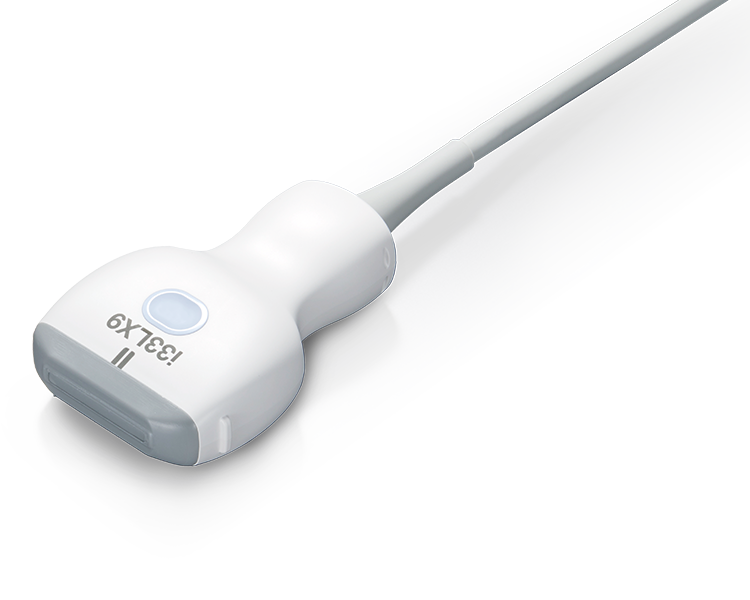
Perfect for small parts examinations
Canon Medical’s PLI-3003BX matrix linear transducer uses intelligent Dynamic Micro-Slice (iDMS) technology with a frequency band of up to 33MHz, which provides extremely fine detail in the near field, making it especially useful for superficial examinations.
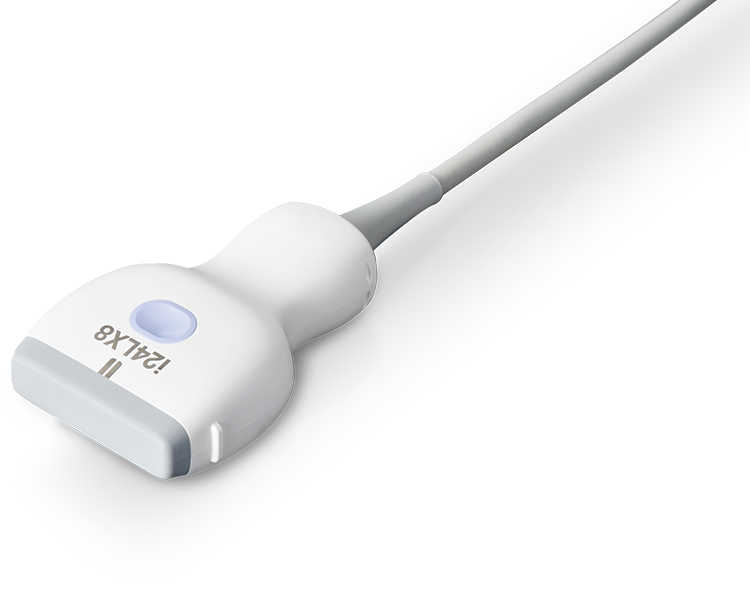
Amazing detail, outstanding versatility 24MHz high frequency linear transducer
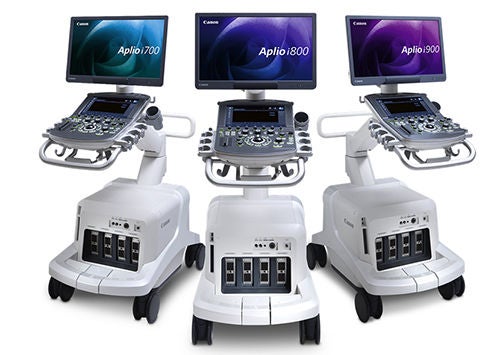
Aplio i-series' 24MHz transducer with extended bandwidth and iDMS technology provides excellent detail and definition in the near field, making it possible to visualize smaller superficial structures that are a defining component of small parts.
Thyroid imaging
Clarity beneath the surface
High-resolution ultrasound is important in thyroid examinations due to its ability to provide detailed visualization of the thyroid gland. It helps assess the size, shape, and structure of the gland, detect small nodules, and characterize them by evaluating their composition and vascularity.
Ultrasound guidance is crucial for precise and successful biopsies of thyroid nodules, ensuring accurate positioning of the needle. Additionally, high-resolution ultrasound enables the monitoring of changes in nodules over time and helps differentiate between cystic and solid lesions.
Ultrasound is a non-invasive and cost-effective imaging modality that plays an increasingly significant role in the evaluation and management of thyroid nodules.
Breast imaging
Sophisticated tools for comprehensive insights
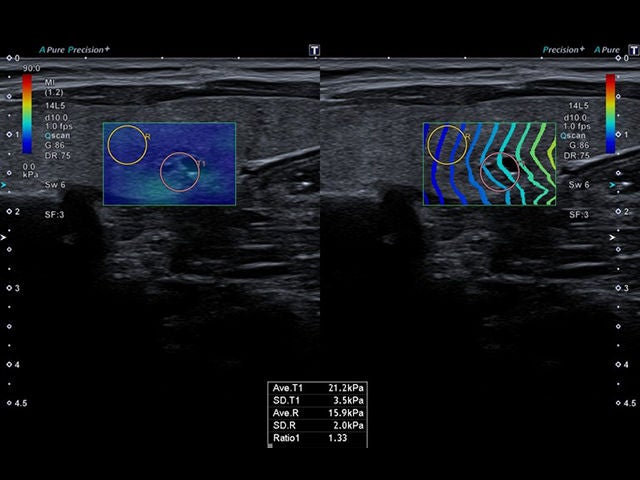
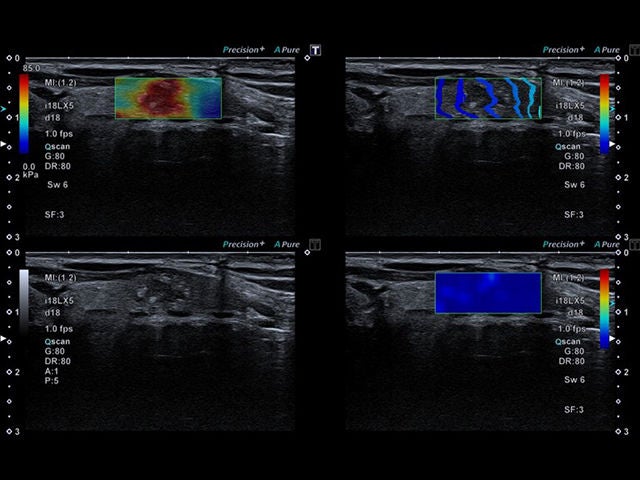
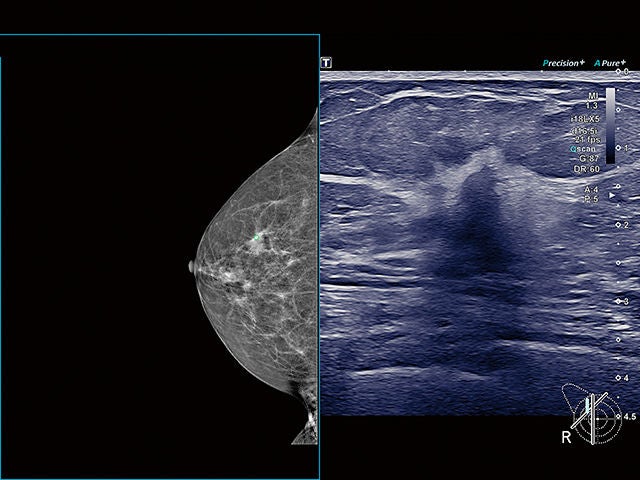
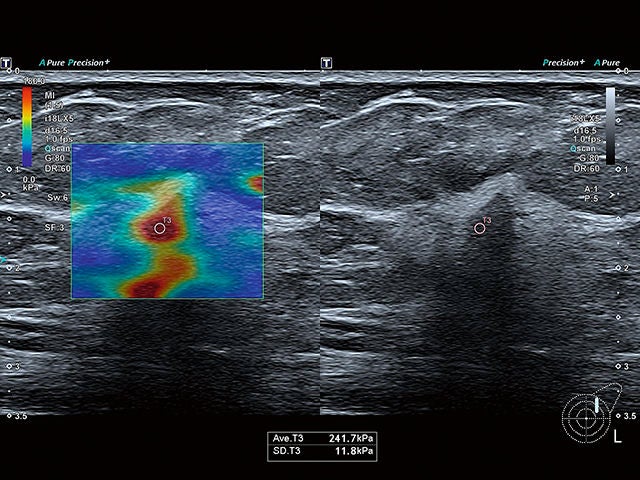
Breast ultrasound is readily available, radiation free and non-invasive. These benefits, however, come with some challenges particularly when dealing with dense breast tissue and in the detection of calcifications and small tumors. With iBeam+ and specialized broadband transducers Aplio enables excellent homogeneity and superior definition even in dense tissue. Aplio also offers a complete set of tools for advanced quantification and evidence-based documentation.
Testes imaging
Comprehensive imaging capability for deeper clinical insights
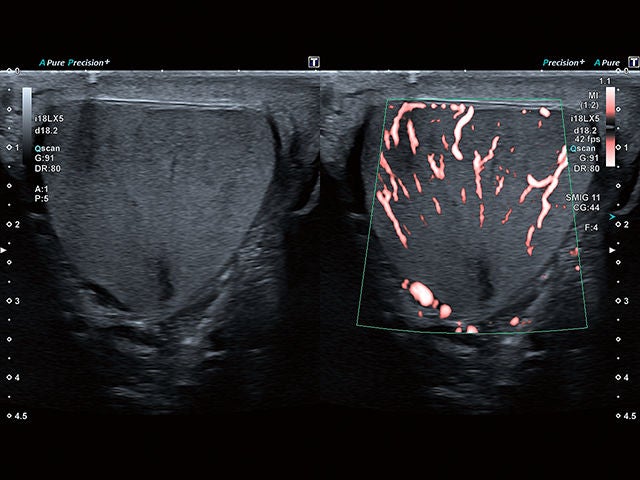
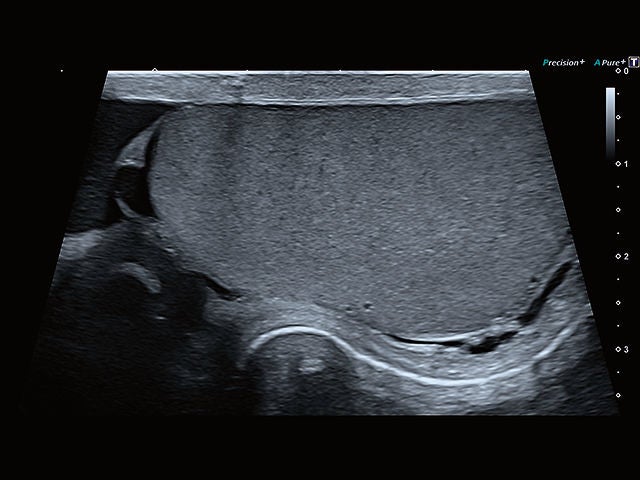
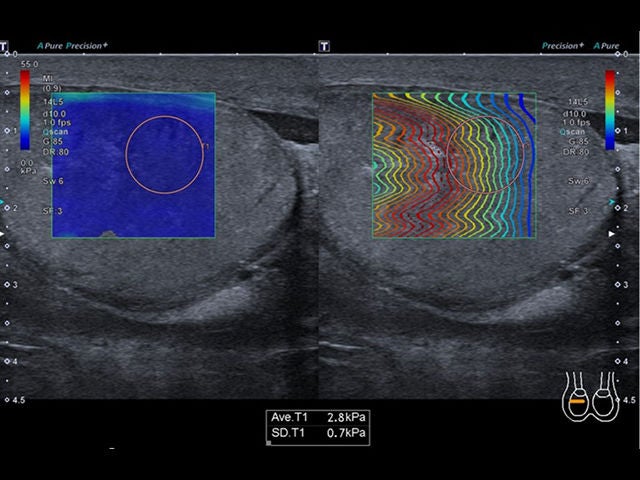
Testicular ultrasound, specifically utilizing high-resolution transducers and techniques like SMI, plays a critical role in assessing testicular health. These advanced tools provide detailed imaging and enable the evaluation of testicular pain, swelling, and masses, aiding in the differentiation of benign and malignant conditions.
SMI allows for accurate assessment of testicular blood flow, providing vital vascular flow information. This helps in the detection of abnormalities like testicular torsion or artery injury, leading to prompt diagnosis and treatment. The combination of high-resolution transducers and SMI enhances quality of information for the diagnostic capabilities of testicular ultrasound, contributing to more precise evaluations and improved patient outcomes.
Lymphatic imaging
Precision through high-resolution imaging
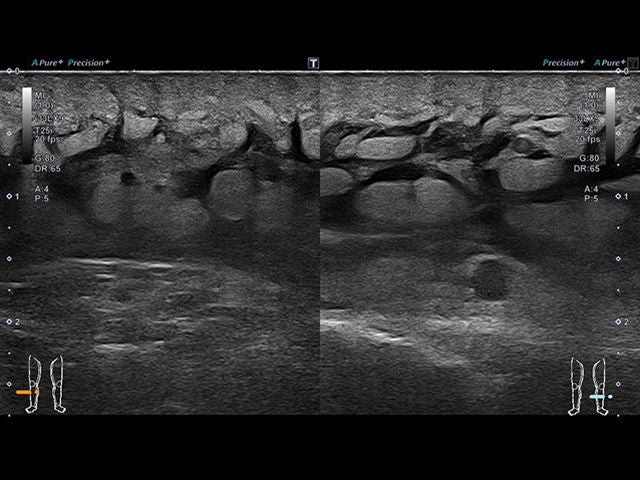
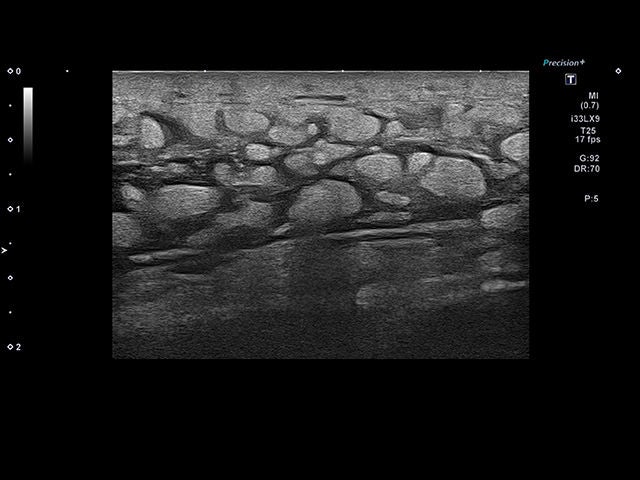
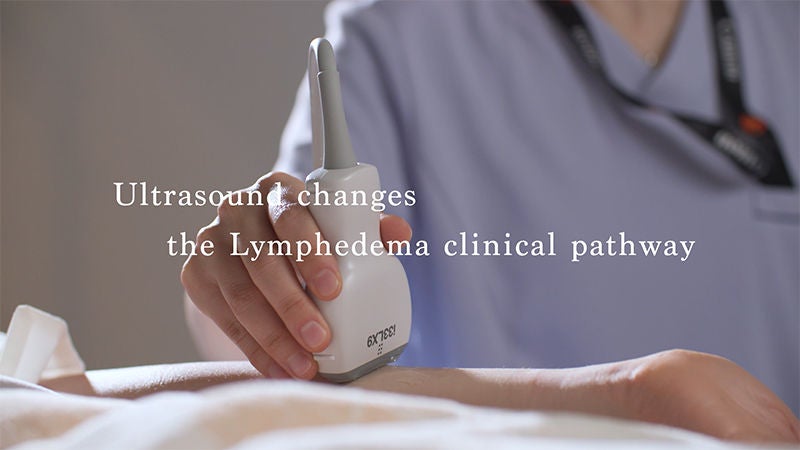
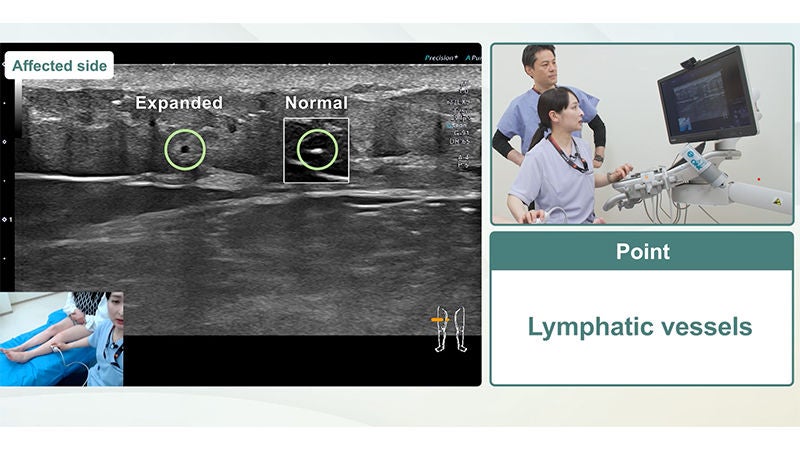
The utilization of advanced imaging with high resolution has brought about a significant transformation in the examination and management of lymphedema in clinical practice. The enhanced level of precision offered by high resolution imaging, reaching up to 33MHz, combined with cutting-edge techniques like SMI, enables medical professionals to effectively evaluate the condition of the Lymphatic system in the limbs. Ultrasound, a widely accessible and noninvasive method, effectively reveals enlarged vessels and the presence of Lymphatic fluid within the tissue, equipping clinicians with invaluable resources for precise diagnosis and subsequent treatment.
The high-resolution imaging supports the evaluation and imaging guidance of node biopsies simplifying evaluation of the Lymphatic system. Interventional biopsies can be carried out under ultrasound control with high detail imaging, and flow information making the procedures simpler and more accurate.
Education and resources
White Papers
Seeking more information? We can help.

Social Media